What denaturation actually means
Proteins are long chains of amino acids folded into specific 3D shapes. In raw shrimp, those folds are held together by weak chemical bonds. When you apply heat, the energy breaks those bonds and the proteins unfold — that’s denaturation.
Once unfolded, the protein chains start bonding to each other in new configurations, forming a denser network. This is why shrimp goes from soft and translucent to firm and opaque. The process is irreversible.
Why shrimp turns pink
Raw shrimp contains a carotenoid pigment called astaxanthin — the same pigment that makes salmon and flamingos pink. In raw shrimp, it’s bound to proteins that mask its color. As those proteins denature and release astaxanthin, the pink-red color appears.
This is why the color change is a reliable doneness indicator. When the shrimp is fully pink and opaque, the proteins have denatured throughout.
The overcooking problem
According to Harold McGee in On Food and Cooking, egg white proteins begin to denature at ~62°C (144°F) and are fully set by 82°C (180°F). The muscle proteins in shrimp follow a similar but faster curve: myosin (the main contractile protein) starts to denature at ~50°C (122°F), while actin — the structural protein — doesn’t denature until ~65°C (149°F). The narrow gap between those two temperatures is why shrimp has such a small window of doneness.
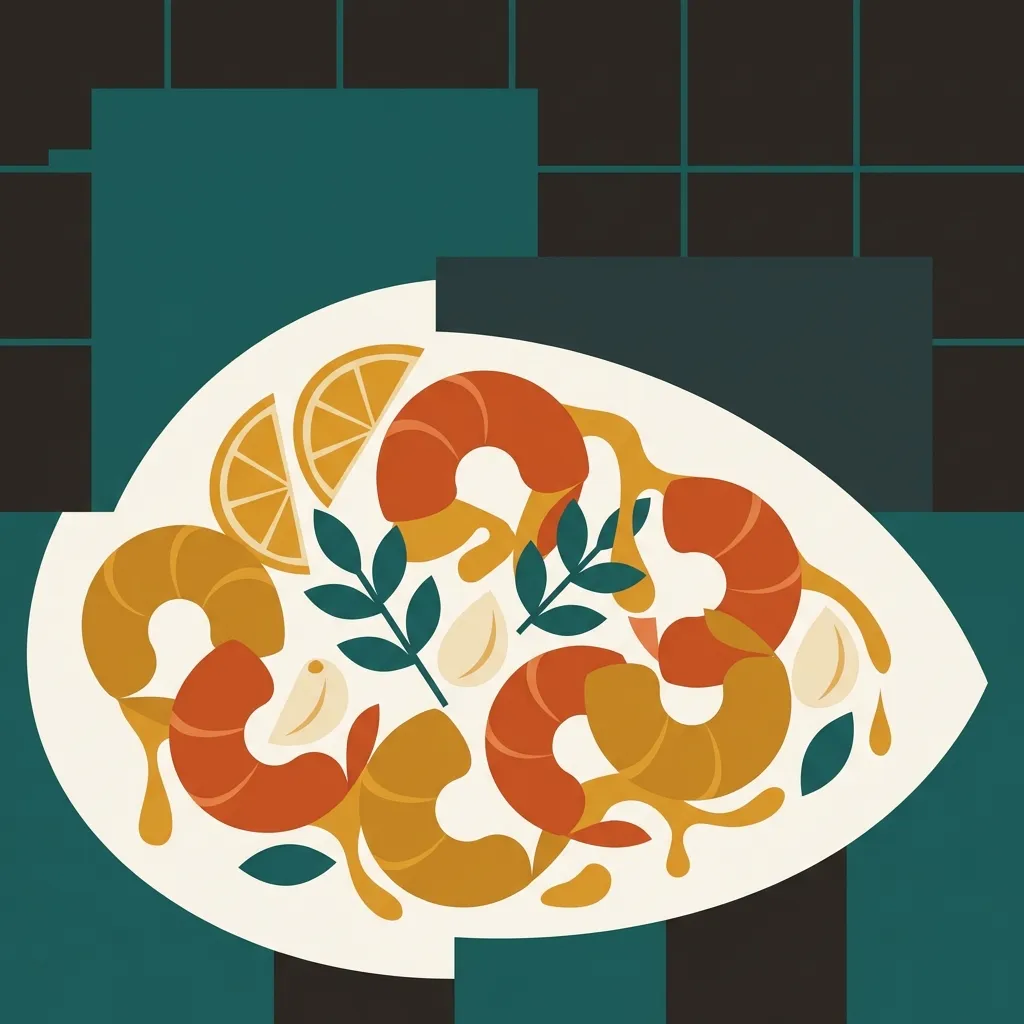
When overcooked, the protein network becomes too dense, squeezing out moisture and producing that rubbery texture. In an air fryer, the high-speed circulating air accelerates moisture loss alongside protein denaturation. A shrimp that curls into a loose C-shape is done. One curled into a tight O has gone too far.
The practical rule
Pull shrimp the moment they’re pink and just opaque. Residual heat continues cooking after removal. For air fryer shrimp at 200°C, 6-8 minutes total — check at 6.
Sources
- Harold McGee, On Food and Cooking (2004)