Stovetop Pasta Aglio e Olio
The simplest Roman classic — spaghetti, golden garlic, olive oil, and parmesan. Ready in 20 minutes with just a handful of ingredients.
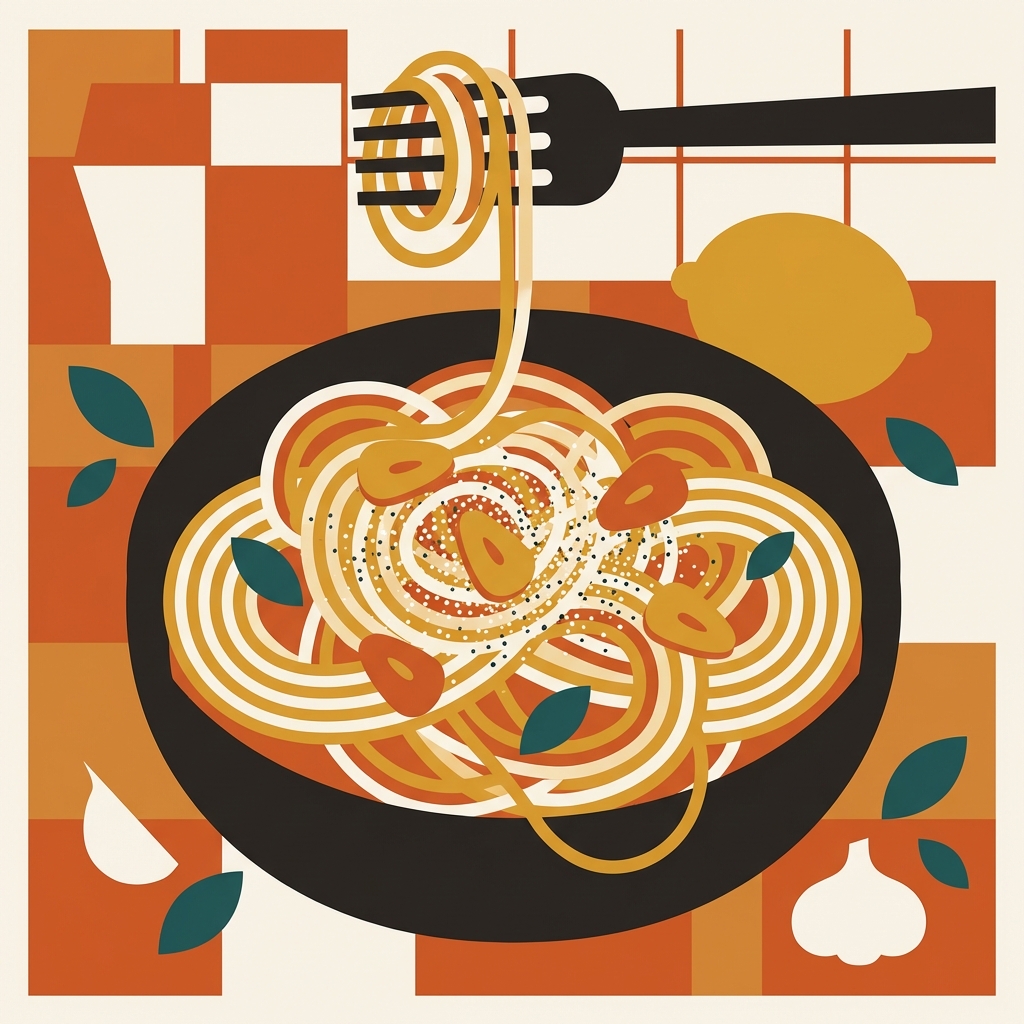
Steps
- 01
Bring a large pot of heavily salted water to a boil. Cook spaghetti 1 minute less than the package directions. Before draining, reserve 250 ml (1 cup) of the starchy pasta water.
- 02
While the pasta cooks, slice the garlic thinly. Heat the olive oil in a large skillet over medium-low heat. Add the garlic and cook gently, stirring occasionally, until pale golden — about 3 to 4 minutes. Do not let it brown too fast or it will turn bitter.
- 03
Add the drained spaghetti directly to the pan. Pour in a splash of the reserved pasta water and toss vigorously over medium heat. The starchy water emulsifies with the oil to coat every strand in a silky sauce.
- 04
Remove the pan from heat. Add most of the grated parmesan and toss again, adding more pasta water a little at a time until the sauce is silky and coats the pasta well. Season with salt and black pepper to taste.
- 05
Serve immediately, divided between warm bowls, with the remaining parmesan scattered on top.
Why it worksWhy does butter break in a pan sauce and how do I fix it?
Why does butter break in a pan sauce and how do I fix it?
Butter breaks when heat separates its fat and water into two distinct phases. Butter is a natural emulsion — about 80% fat dispersed in 16% water — held together by milk proteins and phospholipids. Too much heat evaporates the water, leaving only fat. To mount butter correctly, add it cold off the heat and swirl constantly so the proteins have time to form stable droplets.
Read the full article →Why it worksWhat's the difference between simmering and boiling, and does it matter?
What's the difference between simmering and boiling, and does it matter?
Simmering runs at 85–95°C with gentle bubbles; boiling runs at 100°C with vigorous agitation. The temperature difference is small but the mechanical effect is huge. Hard boiling denatures and toughens proteins, shreds meat, and turns stocks cloudy. Simmering breaks down collagen slowly and keeps proteins tender, producing clearer, richer results.
Read the full article →Why it worksWhy does my gas burner cook differently from electric or induction?
Why does my gas burner cook differently from electric or induction?
Gas heats through radiant heat and convection from the flame, electric coils conduct heat through the pan bottom, and induction generates heat inside the pan itself via electromagnetic fields. These differences mean gas responds fastest to adjustments, electric holds steady heat, and induction is the most precise and efficient of all three.
Read the full article →