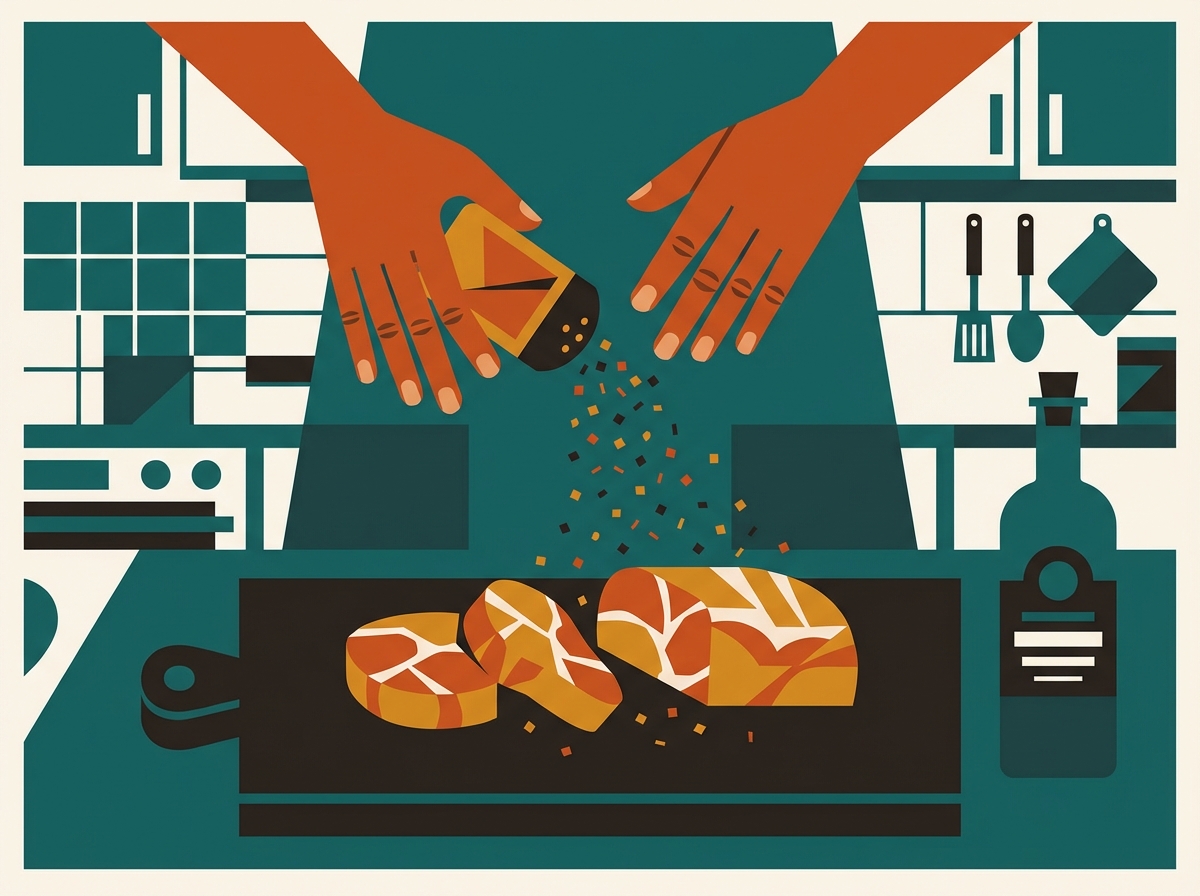
Sous-Vide Strip Steak
A strip steak cooked to perfect medium-rare edge to edge, finished with a hard sear.

Steps
- 01
Pat the steak dry with paper towels. Season generously on both sides with salt and black pepper. Place in a vacuum bag with the thyme and garlic, then seal using a vacuum sealer or the water displacement method.
- 02
Set the circulator to 54°C (129°F). Submerge the sealed bag and cook for 90 minutes. Clip the bag to the container edge to prevent floating.
- 03
Remove the steak from the bag and pat completely dry with paper towels — this is critical for a proper sear. Let it sit uncovered for 2 minutes. Heat a cast iron or stainless steel pan over maximum heat until smoking. Add the butter and sear the steak for 45–60 seconds per side, basting with the melted butter. Do not sear longer — the interior is already at target temperature.
- 04
Slice against the grain and serve immediately. No resting needed — the steak is already at temperature throughout.
Why it worksWhy does 2 degrees make such a big difference in sous-vide?
Why does 2 degrees make such a big difference in sous-vide?
Different proteins in meat set at different temperatures. Myosin — which keeps meat juicy — sets at 50–54°C. Actin — which makes meat dry and chewy — sets above 65°C. A 2°C difference can mean crossing one of these thresholds entirely. You're not just 'more cooked,' you're triggering a different texture.
Read the full article →Why it worksWhy do you still need to sear food after sous-vide?
Why do you still need to sear food after sous-vide?
The Maillard reaction — the browning that creates flavor — requires two conditions: a dry surface and temperatures above 140°C. A water bath provides neither. The food surface is wet and the maximum bath temperature is 85°C. Searing after sous-vide isn't optional; it's a separate cooking step the bath cannot perform.
Read the full article →Why it worksWhat is the Maillard reaction?
What is the Maillard reaction?
The Maillard reaction is a chemical reaction between amino acids and sugars that occurs at temperatures above 140°C (280°F). It creates the brown color, complex flavors, and aromas you associate with seared meat, toasted bread, and roasted vegetables. It's not caramelization — that's sugar-only.
Read the full article →Why it worksWhy is it important to rest meat after cooking?
Why is it important to rest meat after cooking?
Resting meat after cooking keeps it juicy when you slice it. Heat tightens muscle fibers and forces moisture toward the center; resting lets those fibers relax and reabsorb that moisture before it runs out onto the cutting board. Internal temperature also continues rising 2–5°C after you pull the meat, so resting is when the last of the cooking happens.
Read the full article →SubstitutionsSubstitutions
Substitutions
- butter→coconut oil×1
Direct replacement. Adds slight coconut flavor.
- butter→olive oil×0.75
Use 3/4 the amount. Changes texture, less rich. Works for cooking, not for baking.