Sous Vide Duck Breast
Perfectly rosy duck breast with crackling-crisp skin — 5 ingredients, restaurant technique, guaranteed results.
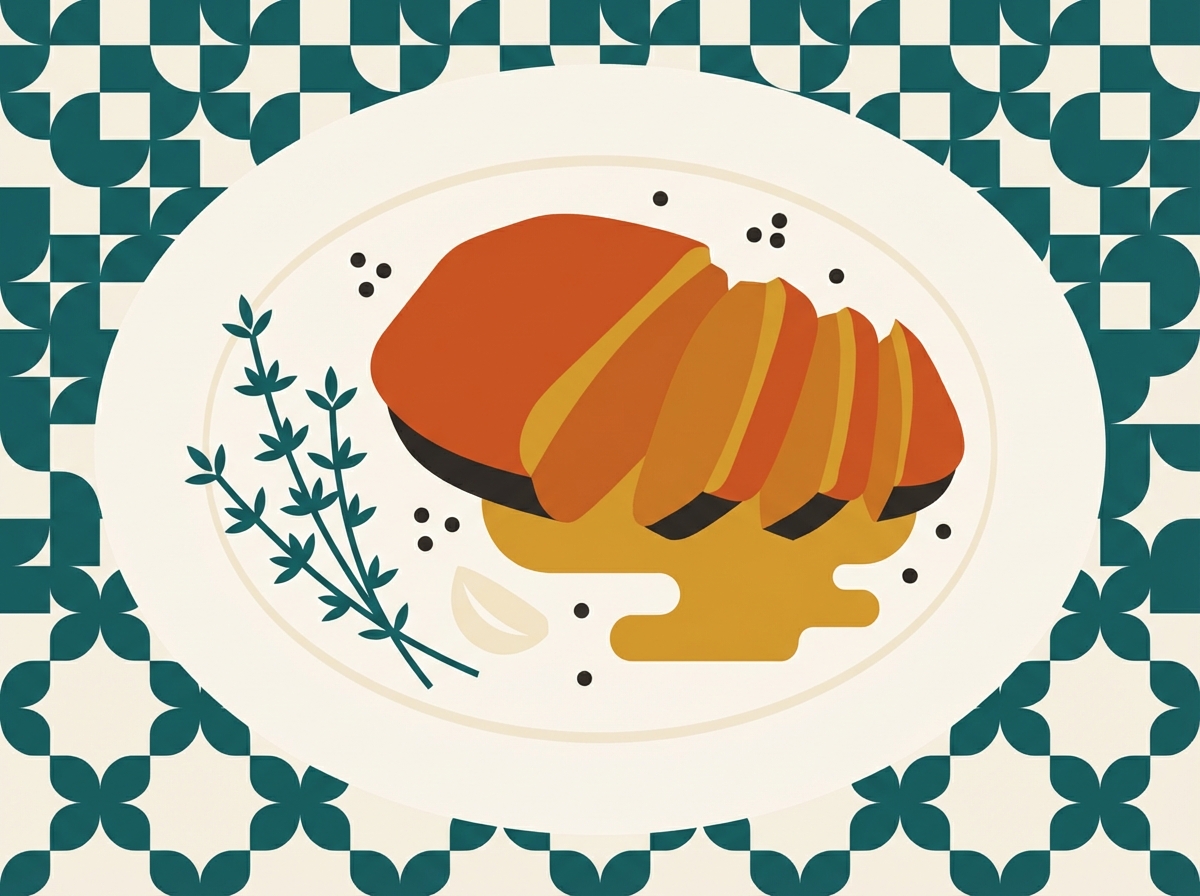
Steps
- 01
Preheat the sous vide bath to 57°C (135°F). Using a sharp knife, score the duck skin in a crosshatch pattern, cutting about 1 cm deep without piercing the flesh. Season both sides generously with salt and pepper.
- 02
Place the duck breast with the thyme and crushed garlic in a vacuum seal bag or zip-lock bag. Remove the air and seal.
- 03
Cook in the sous vide bath at 57°C (135°F) for 2 hours.
- 04
Remove the duck breast from the bag and pat completely dry with paper towels. Place skin-side down in a cold skillet with no added fat. Turn the heat to medium-high and let the fat slowly render for 5 to 6 minutes until the skin is golden and very crispy. Flip and sear the flesh side for 1 minute.
- 05
Rest for 5 minutes, then slice on a bias and serve.
Why it worksWhat is fat rendering and how does it make food crispy?
What is fat rendering and how does it make food crispy?
Fat renders when heat ruptures fat cells and the liquid drains away, leaving a protein matrix that dries out and crisps through Maillard browning above 140°C. For skin-on poultry or pork belly, you need sustained high heat — not just warm — to drive the fat out and let the skin crackle.
Read the full article →Why it worksWhy does 2 degrees make such a big difference in sous-vide?
Why does 2 degrees make such a big difference in sous-vide?
Different proteins in meat set at different temperatures. Myosin — which keeps meat juicy — sets at 50–54°C. Actin — which makes meat dry and chewy — sets above 65°C. A 2°C difference can mean crossing one of these thresholds entirely. You're not just 'more cooked,' you're triggering a different texture.
Read the full article →Why it worksWhy do you still need to sear food after sous-vide?
Why do you still need to sear food after sous-vide?
The Maillard reaction — the browning that creates flavor — requires two conditions: a dry surface and temperatures above 140°C. A water bath provides neither. The food surface is wet and the maximum bath temperature is 85°C. Searing after sous-vide isn't optional; it's a separate cooking step the bath cannot perform.
Read the full article →