Oven Mac and Cheese
Oven mac and cheese in 25 minutes — creamy homemade béchamel, golden panko crust, real cheese all the way through.
Steps
- 01
Preheat the oven to 190°C (375°F). Cook the macaroni in a large pot of salted boiling water until just al dente — about 2 minutes less than the package says. Drain and set aside.
- 02
In the same pot, melt the butter over medium heat. Add the flour and whisk for 1 to 2 minutes to form a blond roux. Pour in the milk in a steady stream, whisking constantly, and cook, stirring, until the sauce thickens, about 5 minutes.
- 03
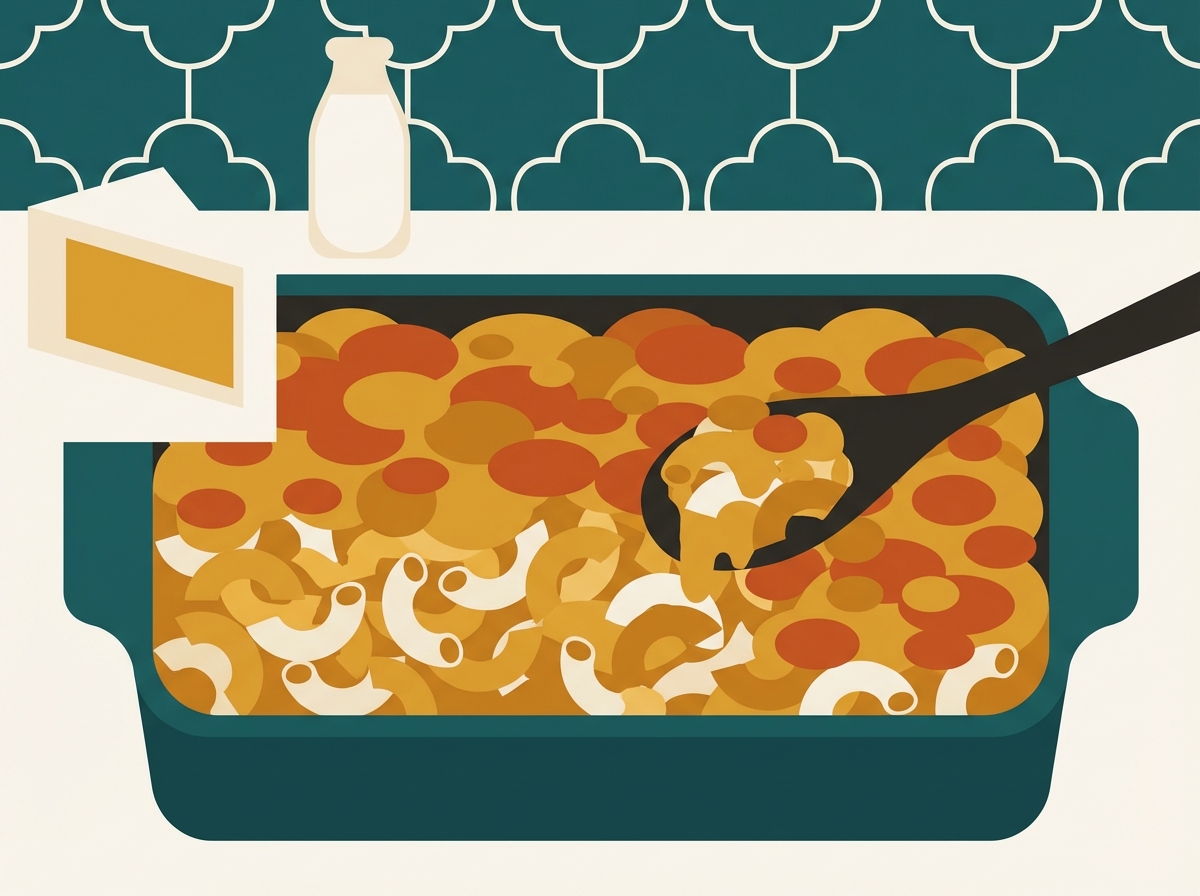
Remove from heat. Add the shredded cheese, salt, and pepper and stir until the sauce is smooth. Fold in the drained macaroni and transfer to a 2-litre baking dish.
- 04
Combine the panko breadcrumbs with the smoked paprika and spread evenly over the macaroni. Bake for 20 to 25 minutes, until the top is golden and crispy and the sauce is bubbling at the edges.
- 05
Rest for 5 minutes before serving.
Why it worksWhat is starch gelatinization in rice?
What is starch gelatinization in rice?
Starch gelatinization is what happens when starch granules in rice absorb water and swell when heated. In a pressure cooker, the sealed environment prevents evaporation and keeps the temperature constant, so every grain cooks uniformly. The result is fluffy, separate rice — not sticky, not crunchy in the middle.
Read the full article →Why it worksWhy does carbonara turn creamy without cream?
Why does carbonara turn creamy without cream?
Carbonara's creaminess comes from emulsification: egg yolks contain lecithin, a molecule that forces fat and water to combine. When you toss hot pasta with the egg-parmesan mixture off the heat, the residual temperature cooks the eggs gently enough to thicken without scrambling, creating a stable, silky sauce.
Read the full article →Why it worksDoes convection mode actually cook food faster?
Does convection mode actually cook food faster?
Yes, convection typically cuts cooking time by 15-25%. The fan strips away a thin layer of cooler, humid air that clings to food surfaces in a still oven. Without that insulating layer, heat transfers faster and surface moisture evaporates sooner — which means browning starts earlier too.
Read the full article →SubstitutionsSubstitutions
Substitutions
- butter→coconut oil×1
Direct replacement. Adds slight coconut flavor.
- butter→olive oil×0.75
Use 3/4 the amount. Changes texture, less rich. Works for cooking, not for baking.